Vacuum prices are all over the map, and the marketing rarely explains what the extra money buys. The useful question is not how much a vacuum costs. It is which design and which features match your floors. A look at how the machines work makes the price tags far easier to read.
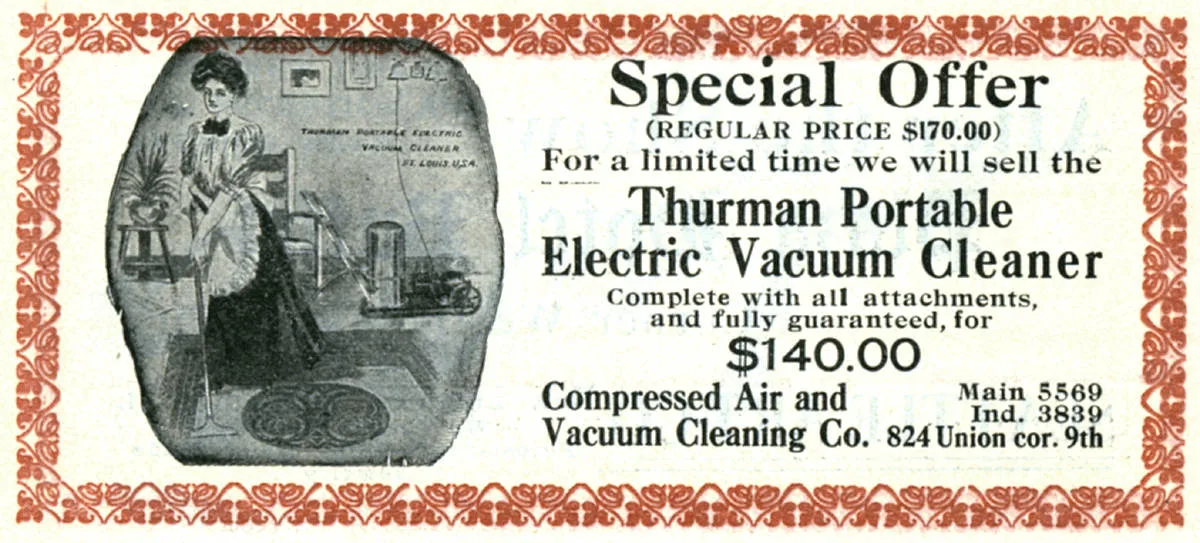
Costs have always tracked capability. When Hoover launched the Model O in 1908, it sold for $60, about $2,150 in 2025 dollars, at a time when a vacuum was a luxury item. After the Second World War, machines became common among the middle classes. Today the spread runs from basic to premium, and the difference comes down to a handful of engineering choices.
Upright or Canister: The First Price Split
The two classic domestic designs divide the market. Upright vacuums attach the cleaning head, handle, and bag to one body. They generally use a rotating brushroll or beater bar, which removes dirt through sweeping and vibration. Canister models, which dominate the European market, put the motor and dust collector in a wheeled unit connected by a hose. Canisters trade power for flexibility, since different heads attach for different tasks and the head reaches under furniture and up stairs more easily.
Direct Fan or Bypass: Where the Money Goes
Uprights come in two engineering types, and this is a real cost driver. Direct-fan cleaners place a large fan close to the suction opening. They create strong airflow from little power and work well on carpets, but lose effectiveness through a long hose. Fan-bypass models place the motor after the filter bag. Their suction holds up for hose cleaning, but their air paths are less efficient and they can require more than twice as much power for the same results. A more efficient motor path costs more to build and less to run. For related coverage, see Buy Less, Style More: How to Build Quiet Luxury on a Budget.
Bagless Designs and the Suction Trade
Cyclonic machines, popular since the 1990s, drop the bag. Dust spins in a vortex and falls into a detachable bin by centrifugal force. Filter bags lose suction as their pores clog, while a well-designed cyclonic system keeps suction until the bin is nearly full. The premium history here is instructive: James Dyson launched his cyclone cleaner in Japan in the 1980s at about US$1800, then released the DC01 in the UK in 1993 for £200. Critics expected the price to doom it, and it became the most popular cleaner in the UK. Competition since then means the cheapest cyclonic models generally cost no more than a conventional cleaner.
Features That Change Daily Use
Several options are worth the money because they change how often you reach for the machine. A dual motor upright lets you switch the brushroll off, so hard floors get cleaned without scattering dirt. Handheld battery models handle small spills, a category opened by the DustBuster in 1979. Robot vacuums collect surface dust on their own; the first laser-mapping model arrived in 2009 and cleaned methodically even between recharge trips. Central systems pipe suction to wall inlets throughout a house, which keeps motor noise out of the room and vents dust away from the living area, a noted benefit for allergy sufferers. We covered a connected angle in How to Build a Slow Weekend Morning (Without Waking at 5 a.m.).
Matching the Machine to the Home
Start with your floors. Wall-to-wall carpet rewards a brushroll and strong airflow, while bare floors are swept fine by many cheaper designs, which is why vacuums remain more common in Western homes. Wet spills call for a shop vac, a separate tool with a wide hose and a drum. If you compare specs, the common metrics are motor power in watts, suction measured in inches of water, and airflow in cubic feet per minute.
Conclusion: Pay for the Job, Not the Badge
A good vacuum is the one whose design fits your home. Decide between upright and canister first, then bagged or cyclonic, then the features you will actually use. Every expensive machine on the shelf exists because some home needs it. Yours may not.