A minimal makeup routine needs four products and about three minutes: a base that evens tone, something to bring warmth back to the cheeks and lips, mascara, and a brow fix. The qualification is that the products have to earn their slot. A stripped-down face has nowhere to hide a formula that pills, creases, or slides off by lunch.
The reason this works is arithmetic, not discipline. A full face is mostly repetition — three products doing versions of the same evening-out job, two doing the same defining job. Cut to the products that each do one thing well, and the face still reads as finished. You just stop paying for the redundancy.
Before the makeup comes the skin. Nothing you put on top behaves well over dry patches or unmoisturized skin, so the two-minute face really starts with whatever cream you already use. If you are still sorting out what belongs on your face before makeup, the correct order to layer skincare matters more than any product choice here. This connects to our earlier piece, The Correct Order to Layer Skincare, Morning and Night.
What do you actually need in a minimal makeup routine?
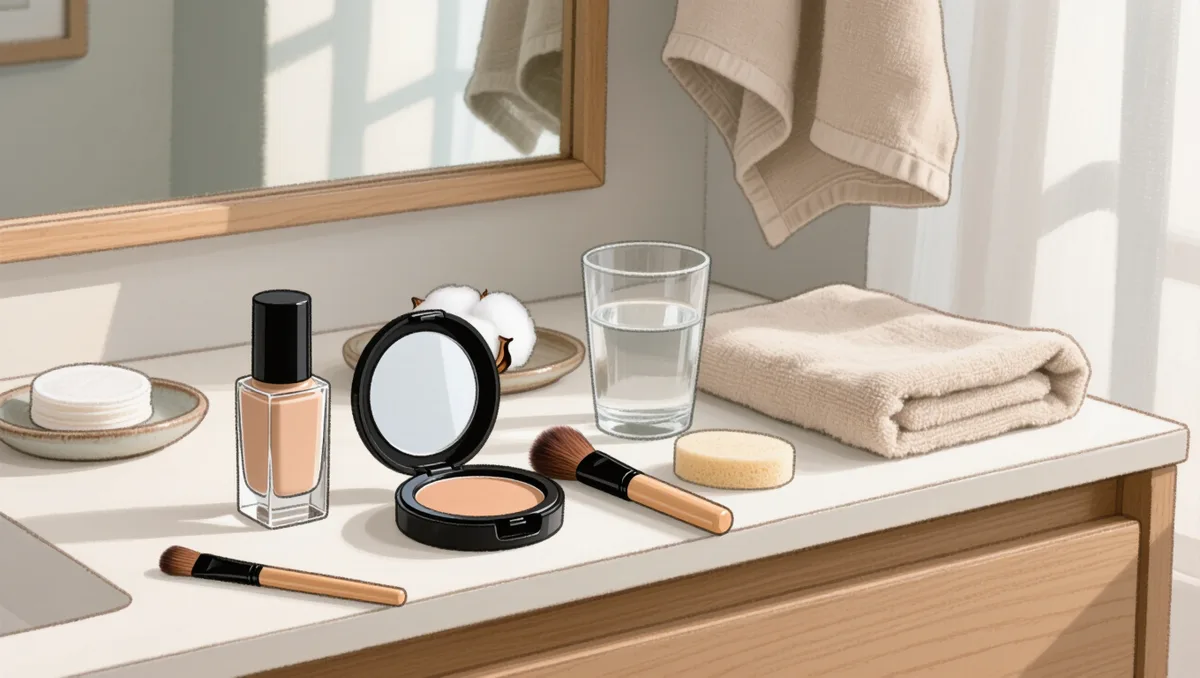
Four slots, and be strict about what fills them. First, a base — a tinted moisturizer, skin tint, or light foundation that evens tone without covering texture. Second, a cheek-and-lip product you can use on both, which is where cream blush and tinted balms earn their place in a small kit. Third, mascara, because it does more per second than any other tool in the bag. Fourth, brows, whether that is a clear gel, a pencil, or nothing more than a spoolie brushed through.
Everything else is optional. Concealer earns a fifth slot only if you have a specific spot you want to address — under-eyes being the usual candidate, and there is real technique involved in getting it to stay put rather than settle. Eyeliner, powder, contour, and highlighter can all wait. If a product is not solving a problem you actually have, it is just a morning tax.
- Base: sheer, matched to your skin, applied with fingers.
- Cheek and lip: one cream product, patted on with a fingertip.
- Mascara: one coat is enough; two if your lashes are stubborn.
- Brows: brushed up and held. That is the whole look.
How do you do it in three minutes, step by step?
The sequence matters less than the order of operations: base first so everything else blends into it, then the warm-up products, then definition last so nothing smudges.
- Minute one — base. Dot tinted moisturizer or skin tint across the center of the face and blend outward with clean fingers. Fingers warm the product, which helps it melt in; a brush is fine, but it adds a step, not polish. Skip setting powder unless your skin genuinely shines through by mid-morning.
- Minute two — warmth. Tap cream blush onto the apples of the cheeks and carry the leftover color on your fingertip across the lips. Using one product in two places is the single biggest time save in a short routine, and it ties the face together, which is most of what "finished" means.
- Minute three — definition. One coat of mascara, wiggled at the root. Brush brows upward; add gel if they need holding. If a blemish or dark circle is bothering you, a fingertip tap of concealer goes here — small amounts, pressed not swiped.
That is the whole routine. If you are running late, minutes one and two alone still produce a face that reads as awake and deliberate. Mascara is the step that can slip; the rest cannot.
Which products earn their slot — and which do not?
The test is simple: does the product do a job nothing else in your four is doing? A multiuse cheek-and-lip stick passes. A dedicated lip liner probably does not, unless shaping and longevity at the lip line are specific concerns you have — in which case it is worth learning properly rather than rushing. A separate bronzer fails the test for most people in a three-minute window, because cream blush placed slightly higher and blended back toward the temple does a similar warming job in one motion.
Multipurpose is the whole philosophy. A tinted lip balm with a little color, a cream blush that works on lips, a brow gel that adds a whisper of tint — these are the products that make a small kit behave like a big one. The counterpoint: do not buy a product for a job you can do with a finger and thirty seconds. Highlighter is the classic example. A dab of your existing cream blush blended at the top of the cheekbone reads as glow without a dedicated product.
What this means for your morning
Our analysis, from watching how real routines collapse: they fail at the products, not the willpower. A fifteen-step face survives only when every step behaves. A four-product face fails only if one product is wrong for your skin — and there are only four to fix. Start by auditing what you already own against the four slots. Most people already own all four and are simply applying them in a slower order than they need to.
Two practical notes. First, skin prep is not optional even when makeup is minimal; a plain moisturizer given a minute to absorb is the difference between blend and streak. If you are choosing one, the ingredients that matter in a basic moisturizer are fewer than the shelf suggests. Second, if your morning includes sun protection — and it should — pick a base with SPF built in, or reapply properly on top; the order and method matter more than the brand. For related coverage, see How to Reapply SPF Over Makeup (Sticks, Powders, and Sprays, Ranked).
The last thing to say about a minimal makeup routine is that it is a skill, and skills improve with reps. The first week, three minutes will feel tight. By the second, your hands know the route and you will likely finish early. Keep the kit small and the technique honest, and the face stays finished long after the novelty wears off.
When is a longer routine actually worth it?
For events, photographs, or a long day when touch-ups are impossible, more products earn their keep: a longer-wear base, real concealer work, defined lips. The point of the minimal routine is not that the full face is wrong. It is that the full face should be a choice you make for an occasion, not the toll you pay to leave the house. On ordinary days, four products and three minutes is the honest price of looking put together — and it is a good deal.
Sources: en.wikipedia.org · three.co.uk · thefreedictionary.com