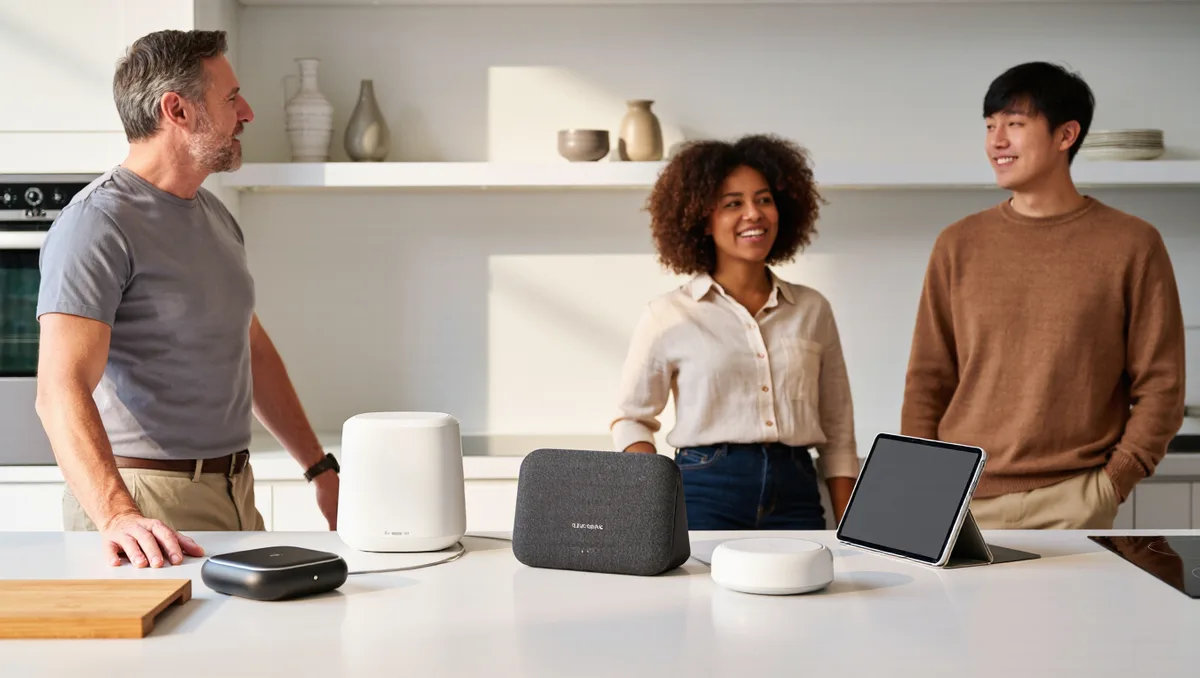
A longevity collective is any group that treats aging well as a shared project rather than a private one. It might be a running club with a book list, a clinic where members compare blood panels, or a neighborhood walking group that swaps recipes. The name is new; the idea is not. People have always banded together to eat better, move more, and look after each other.
What makes the current wave interesting is how deliberately it borrows from evidence. According to Harvard Health Publishing, a large study of 28,000 people linked more frequent social activity with significantly longer survival — the more often people socialized, the greater their likelihood of living longer. That single finding explains a lot about why these communities exist at all. The company is not an add-on to the program. It is the program.
Why do people join longevity communities instead of going it alone?
Because the habits that matter most are the habits hardest to keep by yourself. Harvard Health notes that experts estimate roughly 25% of the variation in human life span comes from genetics, leaving most of it to how we care for our bodies — diet, movement, sleep, and yes, social connection. Those are daily behaviors. Daily behaviors are easier when someone expects you at the gym at seven.
There is also an accountability effect that works in both directions. A group normalizes the boring parts: the repeated strength sessions, the early nights, the refusal of a third drink. And it filters the fads. When a dozen people track the same markers and compare notes, an expensive supplement with no backing tends to get laughed out of the group chat.
The social element is not soft science, either. We looked at what the studies actually find on social connection and lifespan in a separate piece, and the pattern is consistent: isolation is a risk factor, and regular contact is protective. A longevity collective is, in effect, a deliberate answer to isolation. This connects to our earlier piece, Social Connection and Lifespan: What the Studies Actually Find.
What does a typical longevity collective actually do?
The formats vary, but most sit somewhere on a line between casual and clinical. At the casual end: walking groups, cold-water swim clubs, community gardens, supper clubs built around plant-forward cooking. These cost little and ask only for turnout. At the clinical end: membership clinics offering biomarker testing, coaching, and structured training plans. Those come with real price tags, and the honest question is whether the testing adds value beyond what a standard annual check-up covers — a question we tackle in our guide to annual blood panels.
In between sit the book clubs and discussion groups, which matter more than they first appear. Harvard Health emphasizes that longevity rests on plain, repeatable choices: not smoking, limiting alcohol, sleeping seven to nine hours, staying hydrated, eating mostly minimally processed plant foods, and moving regularly. A reading group that keeps those fundamentals in conversation is doing more durable work than any single gadget.
Some communities organize around specific practices — a strength-focused group, a running crew, a fasting-adjacent supper club. The strength ones have solid ground to stand on. Our explainer on resistance training after 40 covers why muscle work becomes more important with age, and a group setting is one of the more reliable ways to keep it in the calendar. For related coverage, see Why Resistance Training Matters More After 40 — and How to Start.
What this means for your wallet
The clinical end of the market is where skepticism earns its keep. Longevity has become a business category — CNBC reporting on the sector describes demand for peptides, testosterone, supplements, IV drips, red-light therapies, and biomarker trackers as part of a burgeoning industry, according to Merriam-Webster's compiled usage examples. Some of that spending buys little that the basics don't already deliver.
A useful rule of thumb, drawn from the evidence rather than any clinic's brochure: the interventions with the strongest support are the unglamorous ones. Harvard Health's summary of the 2018 Physical Activity Guidelines recommends at least 150 minutes of moderate activity a week, or 75 minutes of vigorous movement, plus muscle-strengthening work on two or more days. A collective that organizes members around those numbers is delivering the core product. One that sells a drip before it has organized a single group walk has the sequence backwards.
Price-range honesty applies here as anywhere. A neighborhood walking club costs nothing. A coaching membership or a testing package can run to hundreds or thousands over a year. Both can be worth it; only the second requires scrutiny of what, exactly, is being measured and what changes because of it.
How to judge a community before you join
Not every group deserves your Tuesday evenings. A few questions separate the durable ones from the fashionable ones:
- Is the core activity repeatable? A group you can attend weekly for years beats a retreat you attend once. Longevity is a compounding habit, not an event.
- Does it lead with evidence or with products? If the first conversation is about a supplement protocol rather than sleep, movement, and food, be careful. Harvard Health's rundown of what actually moves the needle is notably free of anything sold in a drip bag.
- Is it body-neutral? The best groups measure strength, sleep, and mood. They do not rank bodies. If the culture is built around appearance, it will wear on you.
- Does it make claims it can't back? No community can promise extra decades. The honest ones talk in probabilities and habits; the dishonest ones talk in transformations.
It is also worth matching the group to your own gaps. If your diet is already sound, a supper club adds little; if your social calendar is empty, it may be the highest-value move available. Our piece on the Mediterranean diet and the evidence behind it covers the food side if that is where you want to start.
The quiet case for doing it together
The longevity collective is ultimately a social technology for a well-understood problem. The fundamentals — eat mostly plants, move often, sleep enough, don't smoke, see people regularly — have been settled for years. What communities add is structure, company, and the small daily pressure of being expected. Harvard Health's summary of the socializing research makes the point plainly: greater frequency of social activity was associated with a greater likelihood of living longer.
So the practical takeaway is modest and cheap. Find people who share the goal. Show up on a schedule. Let the group carry the habits you would otherwise drop. Everything else — the panels, the gadgets, the memberships — is optional furniture. Our longevity section keeps the evidence on each piece in one place if you want to build your own version, with or without a membership fee.